
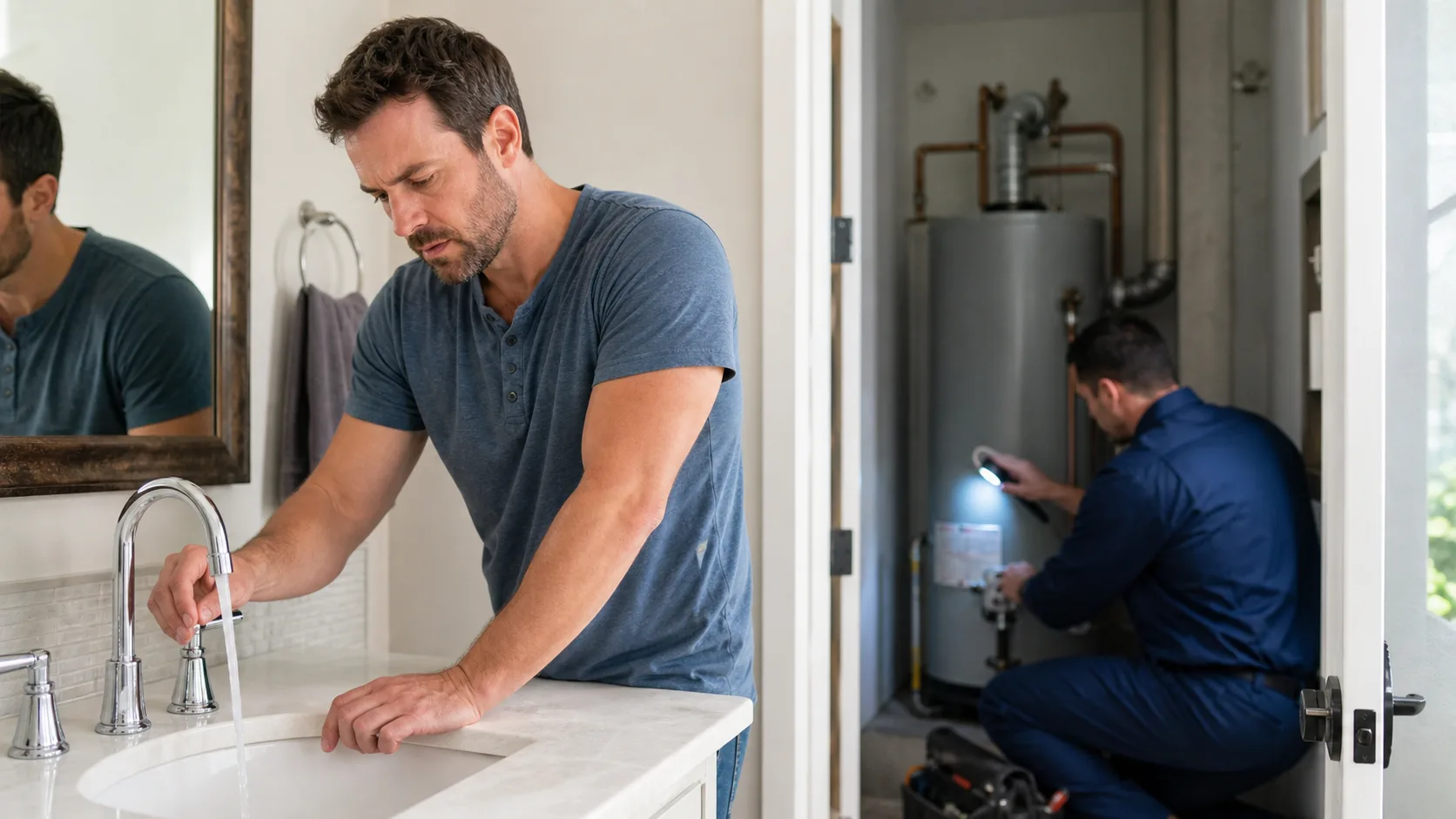
A water heater that suddenly stops producing hot water can have a simple control problem or a serious fuel, electrical, venting, or leak issue. Start by identifying the equipment type and whether the failure affects every hot tap. Do not remove panels, relight unfamiliar equipment, or work around gas and electricity unless you are qualified.
If the tank is leaking, you smell gas, a breaker will not stay set, or combustion looks abnormal, stop troubleshooting. Turn off the affected energy source only if you can do so safely, keep others away, and request professional service.
First confirm that the problem is system-wide
Test more than one hot faucet. If one sink is cold while showers and other taps are hot, the problem may be a faucet cartridge, mixing valve, local crossover, or branch issue rather than the water heater.
Notice whether the water is completely cold, briefly hot, only lukewarm, or changes temperature. Also note whether the failure began after a power outage, gas interruption, plumbing repair, vacation setting, or heavy household use.
Common electric water-heater causes
Electric tank heaters commonly use thermostats and upper and lower elements. A failed upper component can stop most heating; a failed lower element may produce a small amount of hot water that runs out quickly. A tripped breaker or safety limit can also interrupt operation.
A breaker that trips again is a warning, not an invitation to keep resetting it. Water near electrical connections, damaged wiring, or repeated tripping requires qualified diagnosis. Internal resistance and voltage tests should be performed with appropriate safety procedures.
Heat-pump water heaters can be heating while recovery feels slow
A heat-pump water heater may use compressor-only, hybrid, high-demand, vacation, or resistance modes depending on the model. A dirty air filter, restricted airflow, cold installation space, condensate problem, control fault, disabled element, or demand beyond stored capacity can change recovery without creating a complete loss of power.
Record the operating mode, display message, surrounding air temperature, filter condition, condensate behavior, and recent demand. Do not obstruct the intake or exhaust, bypass condensate protection, or assume a larger electrical element is the answer. The diagnosis should separate refrigeration, resistance, control, airflow, and household-demand conditions.
Common gas water-heater causes
Gas units can lose heat because the gas supply is off, a pilot or ignition system fails, the burner does not operate correctly, the control has faulted, or venting and safety sensors prevent operation. Some newer equipment displays status lights or codes that should be recorded before power is cycled.
If you smell gas, leave immediately and call the utility or emergency services from a safe place. Do not attempt ignition. Soot, scorching, rollout, or unusual combustion color also deserves immediate professional attention.
Tankless causes: flow, ignition, scale, and codes
Tankless units must sense minimum flow, ignite or energize correctly, move exhaust or power safely, and transfer heat through a clean exchanger. A clogged inlet filter, closed valve, plumbing crossover, scale, fuel limitation, or control error can interrupt hot water.
Write down the exact code and the fixtures in use when it appears. Repeatedly clearing a code removes diagnostic context and may allow a safety fault to return without repair.
Why hot water runs out too quickly
Short duration is not the same as no heat. It may reflect a failed lower element, damaged dip tube, sediment, undersized storage, changed household demand, a mixing problem, or an appliance that is drawing hot water unexpectedly.
Time how long the water stays hot and note which fixtures run at the same time. Those observations help a technician compare usable capacity with expected recovery.
Safe homeowner checks
Confirm that household hot-water valves are open, the thermostat has not been set to vacation, and the correct breaker is on. Look from a safe distance for active leakage and record display codes. Check multiple fixtures to separate a local problem from a system problem.
Do not remove energized covers, bypass safety controls, alter gas valves, cap a relief line, or raise the temperature to compensate for a fault. Those actions can create burn, shock, fire, or pressure hazards.
- Check multiple hot taps
- Record error lights or codes
- Note recent outages or plumbing work
- Look for water around the unit without touching electrical parts
- Stop if gas odor, repeated breaker trips, or active leakage is present
What a professional diagnosis should cover
The inspection should account for energy supply, controls, heating components or combustion, venting, water flow, temperature, pressure protection, visible corrosion, and the household's demand. The failed part should be identified rather than guessed from age.
If replacement is discussed, ask how capacity, energy source, venting or electrical service, drainage, water conditions, and future maintenance affect the proposal.
Prepare for a productive service visit
Prepare the model and serial information, fuel type, approximate installation date if known, and any error code before calling. Test several faucets and record whether the water is completely cold, briefly hot, or only lukewarm. Note recent outages, gas interruptions, plumbing work, vacations, thermostat changes, or unusually heavy use. For tankless equipment, write down the fixtures running when the error appears and avoid clearing the code repeatedly before the technician can see it.
Make the unit accessible without moving or disconnecting piping. Clear storage from a safe perimeter, keep pets away, and identify the electrical panel or gas shutoff without operating unfamiliar controls. If water is present, do not stand in it to reach a breaker or photograph a label. A dry, unobstructed work area lets the inspection cover safety, operation, and repair options rather than spending the first part of the visit creating access.
What to do next
For a safe, measured diagnosis, request water-heater repair from Brentwood Plumbing & Heating. Share the equipment type, model, error code, leak condition, and whether every hot fixture is affected when you call.