
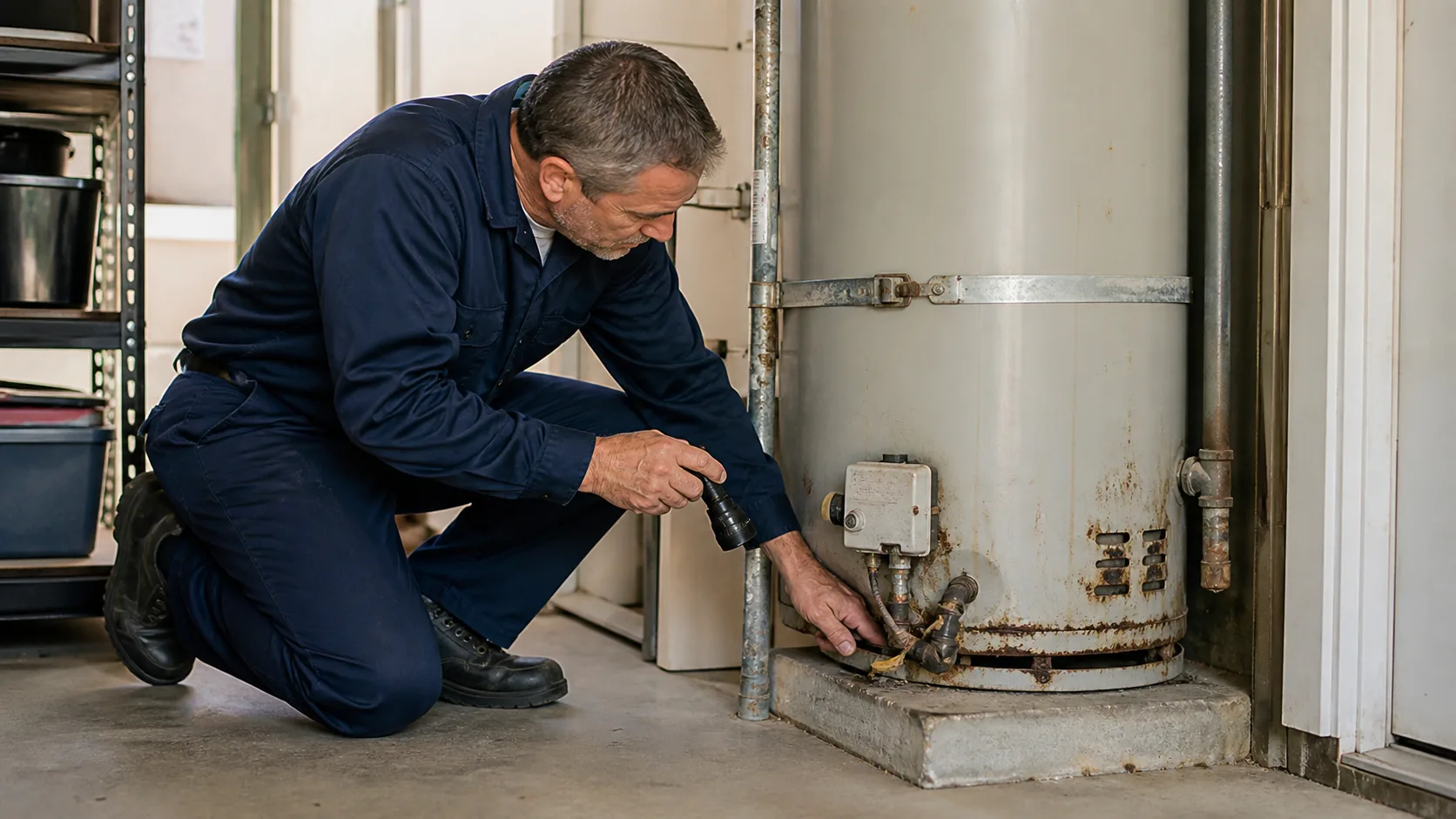
Water heaters make some normal sounds as metal expands, burners ignite, pumps run, and water moves. A new, loud, or changing sound deserves attention because it may point to sediment, restricted flow, high pressure, a failing valve, an ignition issue, or active leakage.
Record the sound and when it occurs: during heating, while a fixture runs, after a valve closes, or continuously. Do not remove covers or operate leaking gas or electrical equipment to get a better recording.
Start by separating normal cycling sounds from a new fault
Brief, repeatable clicks at ignition, a quiet fan or pump, water movement after heavy use, and a low electric-element hum can be normal for some models. Use the manufacturer's operating description for the exact equipment rather than comparing a tankless fan, heat-pump compressor, gas burner, and electric tank as though they should sound alike.
The useful warning is change: louder volume, longer duration, repeated failed ignition, vibration, a sound that begins with one fixture, or noise paired with a code, temperature loss, odor, moisture, pressure change, or relief discharge. Record one complete operating cycle from a safe distance and note the trigger before resetting or draining the unit.
Popping or rumbling in a tank heater
Sediment at the bottom of a tank can trap small pockets of water against the heated surface. Steam bubbles moving through the deposits create popping or rumbling. Mineral-rich water and long maintenance intervals can make buildup more likely.
Flushing can help a sound, serviceable tank when performed appropriately. It cannot repair a corroded vessel. An older tank that has never been maintained should be inspected before deposits are disturbed.
Hissing or sizzling
On an electric tank, hissing can occur around heating elements as deposits heat unevenly. Sizzling can also mean water is reaching a hot surface, burner, or electrical area—an unsafe condition that needs prompt attention.
Look from a safe distance for moisture above and around the unit. Turn off power or fuel only if you know the correct control and can reach it without contacting water.
Ticking and tapping from pipes
Pipes expand and contract as hot water moves through them. They may rub against framing or tight supports and create ticking. The noise can travel, so the sound near the heater may begin in a wall or ceiling.
Support, clearance, and temperature behavior should be checked before openings are made. Insulation or corrected supports can help when expansion is the verified cause.
Banging when water stops
A sharp bang after a fast-closing valve is often associated with water hammer. High pressure, loose piping, quick-closing appliances, failed arrestors, or poor support can contribute.
Measure pressure and identify which fixture triggers the sound. Adding a device without correcting excessive pressure or loose pipe may only move the noise.
Whistling or screeching
Restricted valves, partially closed connections, scale, and high-velocity flow can whistle. Tankless units may also produce fan or combustion-air sounds that change with demand.
Do not adjust fuel controls or safety valves. A technician should inspect the actual flow path and compare the sound with operating specifications.
Tankless clicking, fan noise, or error alarms
Tankless heaters normally click during ignition and run a fan or pump. Repeated ignition attempts, grinding, unusually loud fan noise, or alarms paired with error codes need diagnosis.
Record the code and fixtures in use. Filters, scale, gas or electrical supply, venting, condensate, sensors, and flow can all affect operation; repeated resets erase useful evidence.
When noise becomes urgent
Turn the unit off and request prompt service when noise appears with active leaking, gas odor, scorching, soot, repeated breaker trips, relief discharge, unstable temperature, or visible movement of piping or the tank.
A relief valve or discharge line should never be capped to stop noise or water. It is a safety component, and discharge can signal temperature, pressure, valve, or expansion problems.
- Record the sound from a safe distance
- Note whether heating or fixture use triggers it
- Look for moisture without touching electrical parts
- Do not cap relief piping
- Stop immediately for gas odor, soot, or repeated electrical trips
Prepare for a productive service visit
Make a short audio or video recording from a safe distance and narrate what was happening: a shower started, the burner ignited, the washer valve closed, or the unit had just finished heating. Note whether the sound comes from the tank, a nearby wall, vent, pump, or piping. Record temperature changes, error codes, recent flushing, and any new pressure-related symptoms at toilets or faucets.
For the service visit, keep the relief line, drain valve, vent or electrical area, pressure components, and connected piping visible. Do not tighten, cap, reset, or drain parts immediately before arrival because the operating condition is useful evidence. The technician should reproduce the sound when safe, check pressure and expansion behavior, inspect equipment condition, and explain whether maintenance, a component repair, pipe support, or replacement addresses the actual source.
Once the cause is identified, ask what normal operation should sound like and which change would justify another call. Popping from sediment, hammer from a fast valve, expansion ticking, fan noise, and combustion faults require different corrections and follow-up. Keep any pressure reading, maintenance note, error history, and repaired-part information with the equipment record. That baseline prevents a future technician from treating every noise as the same problem and helps the household notice when a familiar operating sound becomes louder, longer, or paired with leakage.
What to do next
Do not ignore a sound that is new, louder, or paired with leakage or performance loss. Brentwood Plumbing & Heating can inspect the heater, pressure, piping, controls, and water conditions to identify the source before parts are replaced.