
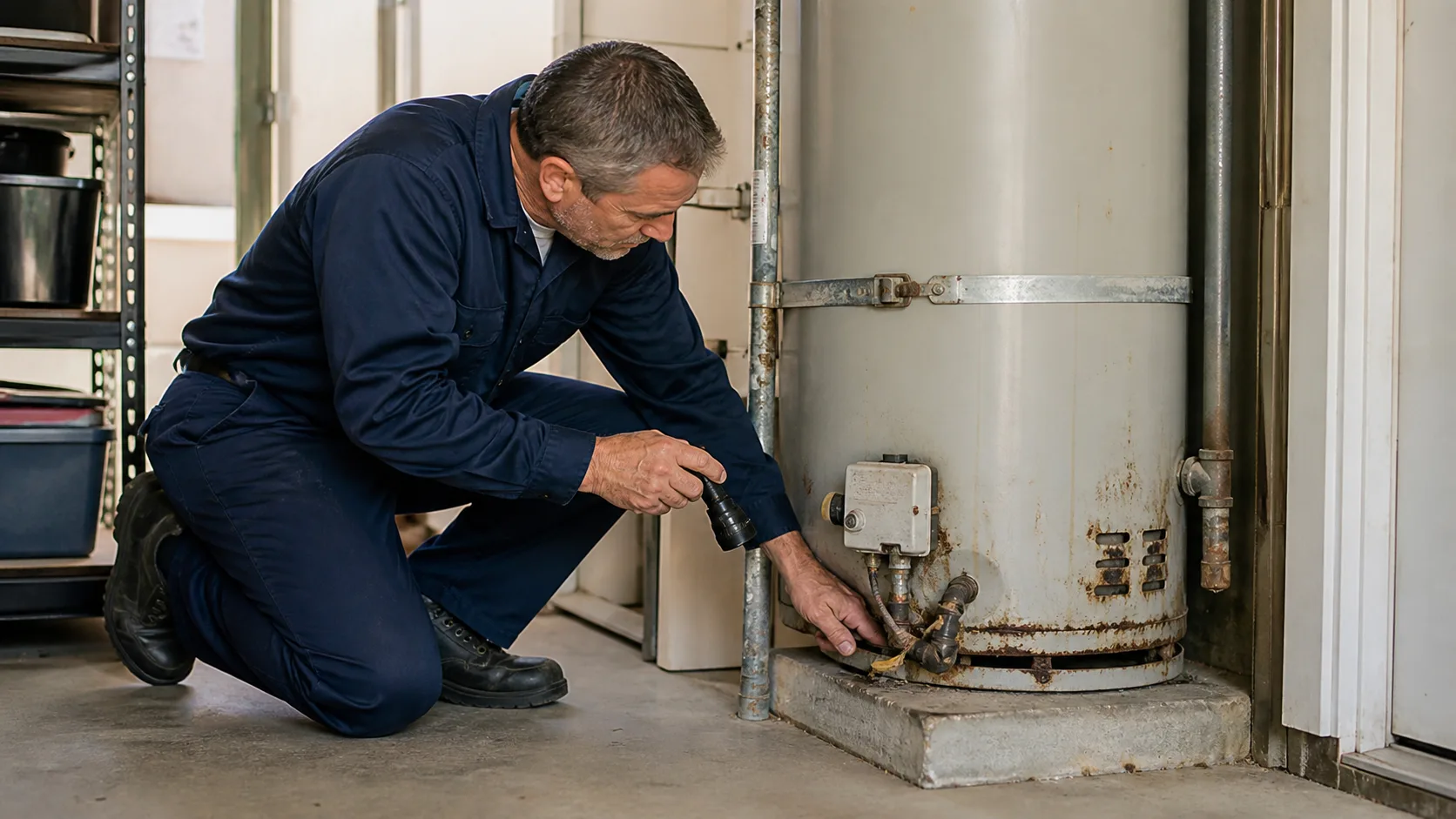
Tank and tankless water heaters can both serve a home well when they are properly sized and installed. The better choice depends on peak demand, fuel or electrical capacity, venting, space, wait time, water conditions, maintenance, budget, and how the household actually uses hot water.
Do not choose from an annual-energy headline alone. Installation changes can dominate the first cost, and a tankless unit does not make water arrive instantly at distant fixtures without a delivery or recirculation plan.
How a storage tank delivers hot water
A tank stores heated water and recovers after use. Its performance depends on usable volume, recovery rate, thermostat operation, incoming water, and sediment condition.
Storage provides a buffer for short simultaneous demand. Once the tank is depleted, the household waits for recovery. A larger tank is not the only answer; fuel input, space, standby loss, and demand patterns matter.
How a tankless unit delivers hot water
A tankless heater senses flow and heats water as it passes through. It can support long draws within its rated flow and temperature rise, but simultaneous demand can exceed capacity.
Minimum flow, ignition or electrical input, venting, filters, scale, and control behavior all affect operation. Correct sizing uses peak simultaneous fixtures rather than average daily gallons alone.
Hot-water wait time
Neither system eliminates the water sitting between the heater and a distant fixture. That cooled water must leave the pipe first.
Recirculation can reduce wait time but adds piping, pump, controls, energy, and cross-connection considerations. Some systems use dedicated returns; others use approved crossover strategies with different tradeoffs.
Gas, electrical, venting, and drainage
A tankless conversion may require a larger gas line, different venting, condensate drainage, or significant electric service. An electric tankless unit can place a large demand on the panel.
A tank replacement can also require connection, vent, pan, drain, seismic, expansion, or code corrections. Compare full installed scopes rather than appliance prices.
Maintenance and water conditions
Tank heaters may need sediment management and protective-component checks. Tankless systems use filters and compact heat exchangers that can require descaling. Both need inspection according to manufacturer guidance and local conditions.
Water treatment can reduce certain scale issues when selected from testing, sized correctly, and maintained. It is not a substitute for appliance maintenance.
Space, noise, and service access
A wall-mounted tankless unit can free floor area, but it still needs clearances and front access. Hiding it behind shelving or in a tight cabinet makes maintenance harder.
Tank units occupy more floor space and hold more stored water. A proper drain pan and route can reduce consequences where allowed and appropriate, but no pan replaces leak inspection.
Is a heat-pump storage water heater a third option?
A heat-pump water heater is still a storage system, but it moves heat from the surrounding air into the tank instead of relying only on direct electric resistance. It can be worth comparing when a Brentwood home has suitable electrical capacity, enough installation space, and an area where airflow, condensate drainage, operating sound, and the cooling effect on the room can be managed.
Do not compare it with tankless by equipment label alone. Review first-hour delivery, tank size, high-demand operating modes, recovery after several fixtures run, installation clearances, and the temperature of the proposed space. Some models use electric resistance during unusually heavy demand. A larger tank may let the unit remain in its more efficient heat-pump mode more often, but the household still needs a design that covers its busiest period.
Which households tend to fit each option
A sound tank replacement can be practical when infrastructure is already correct, demand is predictable, and first cost matters. Tankless can fit homes seeking long-duration hot water, wall-mounted equipment, or a planned remodel that can address infrastructure.
The decision should include future household size, fixture count, simultaneous use, energy source, maintenance tolerance, and how long the home will be occupied.
- Peak simultaneous flow
- Available gas or electrical capacity
- Venting and condensate route
- Hot-water wait and recirculation
- Water conditions and maintenance
- Space and service access
- Full installed cost
Prepare for a productive service visit
Build a demand profile before requesting equipment proposals. List the fixtures that realistically run together, the longest shower pattern, large tubs, laundry and dishwasher timing, and any future bathroom addition. For tankless sizing, the important number is simultaneous flow at the required temperature rise, not the number of bedrooms alone. For storage equipment, usable volume and recovery rate matter together. A contractor should connect the recommendation to those observations and explain what happens on the household's busiest morning, not only under ideal catalog conditions.
Compare ownership requirements as carefully as installation. Ask how each option is isolated for service, what filters or flushing procedures apply, whether recirculation changes energy use or comfort, and which infrastructure upgrades are included. Verify access for future repair and the availability of compatible parts. An efficient appliance installed on an undersized gas line, overloaded electrical system, poor vent route, or restrictive water supply will not deliver its advertised performance. The most useful proposal shows the system, supporting work, commissioning measurements, and ongoing maintenance as one package.
Have each proposal state the expected performance in household terms: how many named fixtures can operate together, how long storage recovery takes, and how recirculation affects wait time at the farthest tap. Also compare outage behavior, noise, usable space, warranty labor, and the local availability of trained service. These factors rarely appear in a simple energy comparison, yet they shape daily satisfaction. Choosing a conventional tank can be a sound decision, and choosing tankless can be a sound decision, when the full installation supports the use case.
What to do next
Ask Brentwood Plumbing & Heating to compare both systems against your real fixture demand and existing infrastructure. The best water heater is the one the home can support and the household can maintain.